

Seville becomes the International Capital of the Iberian Lynx
Seville becomes the International Capital of the Iberian Lynx
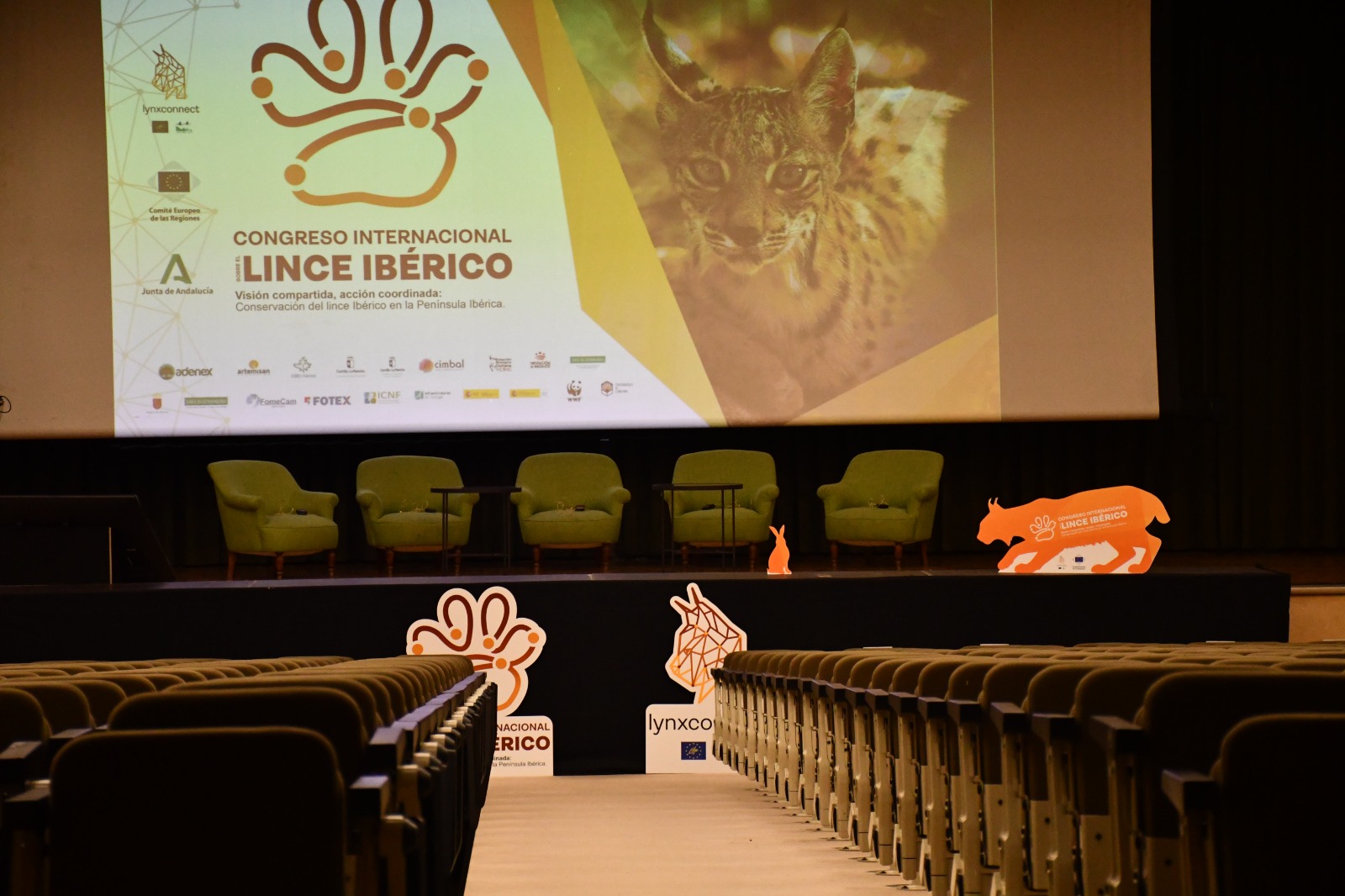
For three days (November 25-27), the International Congress on the Iberian Lynx hosted attendees from seven countries to showcase the key aspects of a conservation project that has become a benchmark and to outline the next steps for the species.
The latest LIFE Project linked to the Iberian lynx, LynxConnect, is in the final stage of its implementation, after five years of work, leaving the species in the “Vulnerable” category according to the IUCN (moving from “Endangered” to “Vulnerable”) and confirming the recovery of its populations, with more than 2,400 individuals counted on the Iberian Peninsula and with connectivity between subpopulations that has become a key lifeline for what was once “the most threatened feline in the world.”
This transnational project, spearheaded by the Regional Government of Andalusia and supported by 20 public and private partners from Spain and Portugal (most of whom were represented at the event), was responsible for organizing a meeting that was met with tremendous success: over 300 attendees and a waiting list that kept growing, demonstrating that the Iberian lynx matters.
Following the opening remarks by Catalina García, Minister of Sustainability for the Regional Government of Andalusia, Javier Salcedo, Coordinator of LIFE LynxConnect, gave an overview of the milestones achieved throughout this innovative, multidisciplinary, and demonstrably successful project. From there, specialists from prestigious research centers in England, Italy, Portugal, and Spain presented the latest developments in genetic management (and the need for reinforcements to facilitate long-term resilience), monitoring techniques, and paleontology (including intriguing discoveries such as the recent Iberian lynx fossils found in Crimea, Ukraine).
Furthermore, the round table discussion featuring Miguel Delibes, Astrid Vargas, Urs, and Christine Breitenmoser became a journey back in time, to the beginnings of a unique conservation project that started with all sorts of doubts but also with the conviction that the Iberian lynx could not be allowed to disappear.
On the 27th, the attendees traveled to the Sierra Norte of Seville to visit areas where work is being done with the species and to learn about actions carried out on the ground. They also met with landowners and local authorities, crucial and indispensable components for the success achieved by the most Iberian of our felines.
The book of abstracts and conclusions will be available soon.
Thank you all. There was much to celebrate in Seville.